


Written By, Mike McGlothlin
Cummins 855
History and the “Big Cam” Name
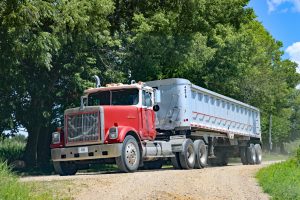
Best known in “Big Cam” form, the Cummins 855 cubic inch inline-six became the highest-selling heavy-duty Class 8 diesel engine in America in the early 1980s. Cummins’ cast-iron block and head 14.0L power plant earned the Big Cam name due to the manufacturer equipping the engine with a large, 2.5-inch diameter camshaft (as opposed to the more traditional, 2-inch diameter camshaft). Developed during the mid 1970s, when energy conservation became a national priority, the 855’s larger cam shortened the engine’s injection period to provide a more efficient combustion event. This was possible due to the 855 utilizing cam-driven unit injection. As a result, more torque could be made at lower rpm than with previous engines, and less fuel was consumed, which are advantages often highlighted in Cummins 855 specs comparisons.
Common Applications

Without question, the Cummins 855 had a major impact on the Class 8 truck market, eventually outselling every other engine option in the segment for a significant period of time. However, the 855 also made the rounds in construction equipment (think motor graders, excavators, bulldozers and asphalt pavers), the mining industry (haul trucks and drills often received them), and large farm tractors such as John Deere’s 8960 and 8970 series, Steigers, and 800 series Versatile tractors, to name a few. The Cummins 855 also earned a great reputation for durability in power generation and marine applications. Out on the water, the 855 could be found in cruise vessels, fishing boats, work boats, and trawlers. This versatility reinforced the long-term relevance of the Cummins 855 Big Cam among operators worldwide.
15-Year Production Run

First hitting the assembly line in 1976, the Cummins 855 was built through 1990, and was treated to several different revisions and updates along the way. Beginning in 1977, on-highway versions were produced at Cummins’ Jamestown Engine Plant (JEP) in western New York. In the early going, 65 units (not all necessarily being 855’s) were built per day—a figure that bulged to 400 engines daily in the years that followed. During its heyday, the Cummins 855 owned the Class 8 truck market and grew Cummins’ market share in the coveted segment from 29-percent in 1975 to 63-percent by 1983. Production figures like these frequently appear in Cummins 855 history discussions due to the engine’s widespread impact.
The Legacy It Left
Durability, durability, durability. Simple, mechanical unit injection, cast-iron construction, forged-steel internals, and large bearings all contributed to the Cummins 855 being renowned for its robustness. There is a 700,000-mile overhaul expectation with the 855, but most well-maintained engines go well-beyond that before requiring any work. Secondly, it was powerful, with Big Cam versions affording operators an abundance of low-rpm torque. This excess grunt at relatively low engine speed helped the 855 Big Cam become the most fuel-efficient Class 8 engine on the market. The engine was so successful, its basic design and architecture was carried over to its replacement, the Cummins N14, which would go on to become a legendary power plant in its own right.
Sources:
Big Bear Engine Company
https://www.4btengines.com/the-best-and-worst-class-8-diesel-engines/
https://www.4btengines.com/cummins-855-engines/
Cummins
www.cummins.com
https://www.cummins.com/timeline
History of the Cummins H-NH-NT-N14 Engines
https://www.youtube.com/watch?v=__TbIQRo0H0
Cruikshank, Jeffrey L., and David B. Sicilia, “The Engine That Could: 75 Years of Values-Driven Change at Cummins Engine Company,” Harvard Business School Press, 1997.
Trucking Info
https://www.truckinginfo.com/93694/cummins-ships-dodge-ram-engine-no-1-million


