


Written By, Mike McGlothlin
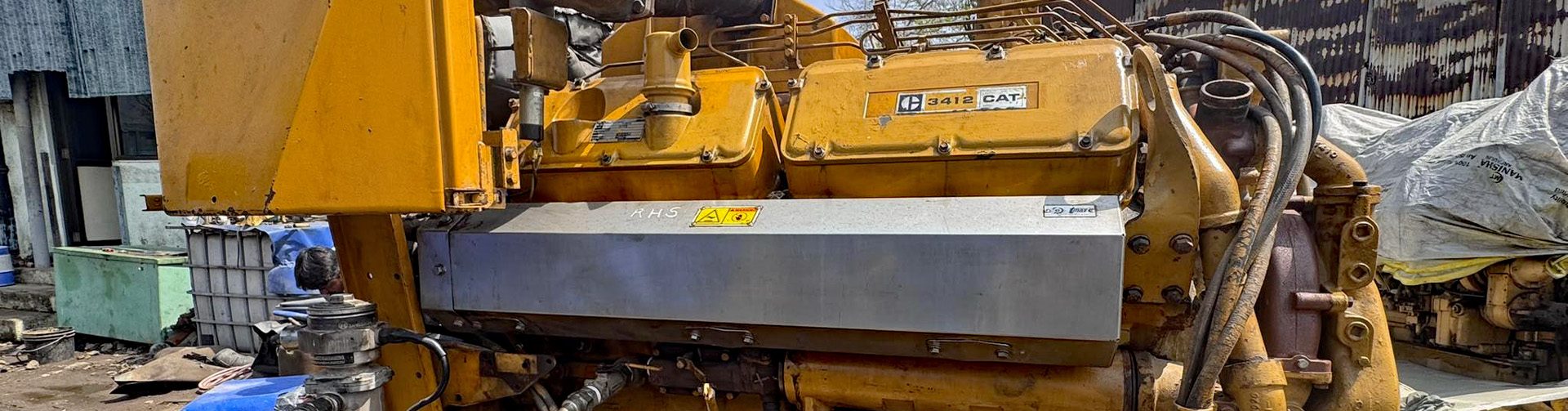
It’s a beast of an engine that displaces 1,649 cubic inches (27.0L) and shares the same bore and stroke as the CAT 3408—but the CAT 3412 engine is no V-8. . It’s an industrial-grade, 65-degree V-12 with replaceable wet liners, a cast-iron block (and heads), and can turn out as much as 1,400 hp in marine trim. But this engine’s usage goes far beyond ocean-going vessels. You can find it in everything from mine haul trucks and drills to bulldozers and loaders, as well as in chippers and tub grinders. It’s also highly popular in gen-set form. While highly reliable, the 3412 does have its own set of pattern problems. We’ll explore the 10 most common issues—and offer a solution for each—below.
HIGHLIGHTS
Most Common Problems:
*Overheating
*Blown Head Gasket
Most Expensive Problem:
*Liner Failure
*Cracked Cylinder Head
*Lifter Failure
*Aftercooler Failure
Less-Frequent Headaches:
*Oil Leaks
*Injector Failure
*Rod Bearing Failure
Problem #1: Overheating

Coolant Temperature Gauge Cat 3412 Diesel Engine Overheat
It seems overheating is a common ailment for most working-class diesel engines. For these power plants, ‘round the clock workloads—complete with high engine loads and steady operation at peak rpm—mean the cooling system has to be in perfect working order to keep the engine safe. Unfortunately, constant rpm and heavy-duty work in harsh conditions also means coolant temperature can quickly get out of hand if something goes wrong. And when coolant reaches its boiling point, expensive (and sometimes even irreparable) engine damage can be the result.
What Happens

Caterpillar 3412 Diesel Engine Bandit 4680XP Beast Grinder
Any engine can overheat in any application, but for the CAT 3412 it is unequivocally more common in chipper and grinder type equipment. The environment these engines live in is about as filthy as it gets. Airborne debris (namely dust), hot ambient temps, and heavy engine loads mean a 3412 operating here definitely has its work cut out for it. A stuck thermostat, an inadequate coolant level, running the wrong coolant, and airflow, radiator and oil cooler blockages can put this engine on a fast-track toward overheating.
Solution(s)

Cat Extended Life Coolant Diesel Engine Antifreeze
The best way to avoid an overheating 3412 happens with a tip-top maintenance regimen. Combine routine (and even early interval) oil and filter changes with fuel that’s always fresh, an air filter that’s always clean, and (of course) a coolant that meets Caterpillar’s additive requirements and your 3412 will reward you with impressive durability. Regular inspections of the radiator (for blockages), cooling system plumbing (for leaks), and that no intake or exhaust leaks develop is paramount in keeping this engine from experiencing unnecessary heat. It goes without saying that all coolant leaks, a water pump failure, and a thermostat failure should be addressed as soon as possible once discovered.
Problem #2: Head Gasket(s)

Caterpillar Blown Head Gasket Coolant On Piston
Like 99.9-percent of all internal combustion engines, the CAT 3412 uses a traditional style cylinder head and block configuration—which is to say there are head gaskets in the mix. It’s vital that this head-to-block connection point remain perfectly sealed. When it’s not, you get what’s known as a blown head gasket. Blown head gaskets are never an easy fix, especially for larger, cast-iron engines like the 3412. Despite what looks like two individual cylinder heads per bank, the 3412 features two one-piece heads. What confused some folks, at least at first, is this engine’s use of two separate rocker boxes per head.
What Happens

Engine Rebuild Cat 3412 Diesel Generator Repair
In general, head gasket failure isn’t rampant on the CAT 3412. After all, they boast eight sizeable head bolts per cylinder (torqued to 330 ft-lbs) for superb clamping. However, as these engines age—or whenever they’re exposed to an overheat—warpage can occur and allow a portion of one of the cylinder heads to lift and lose its seal against the block. Finding a pressurized cooling system is a telltale sign that you’ve lost a head gasket, as is excessive and unexplainable coolant loss, white smoke leaving the exhaust and/or overheating.
Solution

Head Gasket Repair Cat 3412 Diesel Engine Block
The only remedy for a blown head gasket is to dive in and pull the cylinder head. If the head passes crack, valve seat, and valve guide inspection, it can be resurfaced and reused. It’s worth noting that proper liner protrusion is crucial to head gasket life. As such, it should be measured and corrected if needed. A fresh head gasket, new head bolts (properly torqued, and in the correct sequence), and fresh extended life coolant (ELC) are par for the course here, but care should also be taken to replace any questionable parts you encounter during the teardown or reassembly (think rocker box seals, exhaust manifold gaskets, compression gaskets, etc.).
Problem #3: Cracked Cylinder Head

Cracked Cylinder Head Cat 3412 Diesel Engine Failure
Any time a CAT 3412 experiences an overheat scenario, the cylinder head can incur damage. Most often, we see the development of cracks (in addition to warpage), usually on the fire deck surface of the cylinder head. Many times, an affected cylinder head can survive for thousands of operating hours before showing any symptoms. In other instances, the cracks can go completely unnoticed until a related repair brings a mechanic deep inside the engine. In fact, most cracked cylinder heads are only discovered during teardown for a complete engine overhaul.
What Happens

Diesel Engine Rebuild Caterpillar Industrial 3412 V12 Repair
However, if a cracked cylinder head does rear its ugly head, the results can be both immediately noticeable and extensively devastating. Many times, a cracked head will allow the crankcase to fill with coolant. As you can imagine, coolant-in-oil contamination is extremely hard on bearings, hence why many mechanics roll in new main and rod bearings any time this situation plays out. In some instances, a hairline crack can spread into the valve seat region of the head, dislodging the valve seat. It’s anyone’s guess what happens from there, but it almost always culminates in expensive engine damage.
Solution(s)

Cat 3412 Diesel Engine Cylinder Head Removal Tub Grinder
While it may be impossible to avoid the formation of cracks in a 3412’s cylinder heads, there are steps any operator can take to limit the conditions which create them. First, avoid elevated coolant temperature (again, no overheats). Two, always keep exhaust gas temperature (EGT) in check by maintaining a close eye on the pyrometer. And three, never allow abusive operation of the equipment the engine is powering. While some cracked heads can be repaired and placed back into service, many opt to start fresh with a new or remanufactured cylinder head.
Problem #4: Liner Failure

Cat 3412 Diesel Engine Damage Wet Sleeve Cracked Liner
As with many heavy-duty diesel engines, the CAT 3412 benefits from wet liners (also known as wet sleeves). These replaceable ductile iron sleeves not only make rebuilding each individual cylinder possible, but because they allow coolant to circulate around the outside of them, they offer the kind of efficient heat transfer that enables each cylinder to remain perfectly round for thousands upon thousands of operating hours. And because wet sleeves can be replaced one at a time, they make in-field repair much more affordable for the average 3412 owner. However, wet liners aren’t without their own sets of occasional issues.
What Happens

Wet Liner Hole Diesel Engine Failure Cat 3412 Sleeve Replacement Parts
The easiest way to kill a wet liner is through poor maintenance. Running the wrong coolant, allowing contaminants into the cooling system, and operating the engine while low on coolant can all damage the external wall of the liner. Cavitation, which leads to corrosion, and electrolysis are also common killers of wet liners, often leading to pitting of the liner itself. Eventually, a pin hole develops, deepens, and allows engine oil to mix with coolant—and coolant to mix with oil. To a lesser extent, incorrect liner protrusion can also contribute to liner failure in a 3412.
Solution(s)

Caterpillar Replacement Parts Cat 3412 Wet Liner Diesel Engine
There are no secret formulas here. When a liner corrodes enough to allow fluid mixing and contamination it’s time to replace the failed unit. That means pulling one cylinder head, the deck plate, and the troublesome liner. Depending on the amount of hours on the engine, the budget, or the owner’s preference, some liner failures result in a full-on overhaul of the engine to start anew. Our best advice for either scenario (single cylinder replacement or complete engine rebuild) is to employ the services of a mechanic with experience working on the 3412 and only source genuine Caterpillar replacement parts or reputable aftermarket components.
Problem #5: Lifter Failure

Cat 3412 Lifter Failure Diesel Engine Valve Train Problem
There is a reason why you can find CAT 3412 engines humming away in virtually every industry, all across the world. It’s because this industrial-strength V-12 has a reputation for steadfast durability—and the track record to back it up. However, as a 3412 continues to accumulate thousands of hours, one piece within the valvetrain becomes a worry. That component is its lifters. With old age, high usage, and maintenance neglect, this vital link between the camshaft and the valves can fail. And unfortunately, lifter failure can be catastrophic.
What Happens

Diesel Engine Damage Camshaft Lobe Failure
In most cases, a failed roller is the culprit behind a bad lifter in the CAT 3412. When the roller seizes (or worse, comes apart), it immediately begins damaging the camshaft lobe it’s intended to ride on. Friction occurs from metal-on-metal contact, which leads to extreme heat and, eventually, both components breaking down. When this happens, metal debris contaminates the engine oil. Upon inspection, it’s typical to find portions of the faulty lifter in the 3412’s oil pan. Of course, lifter failure is highly audible and noticeable, with this type of failure capable of wrecking the entire engine.
Solution(s)

Heavy Duty Diesel Engine Cat 3412 Camshaft Install
If caught in time, a new camshaft and lifter may be all that’s required to get you up and running again. However, it may only buy you a few hundred hours. Following any lifter failure, a thorough inspection of the entire engine should always be performed. That means not only pulling and checking the cam but also removing the oil pan. Frequently, this is where other issues are discovered. Damage to additional cam lobes, debris making it into the cylinders, scored bearings, etc. Anything is possible when a lifter collapses, which prompts a lot of owners to move forward with a complete engine overhaul.
Problem #6: Aftercooler Failure (Marine)

Cat 3412 Aftercooler Failure Industrial Marine Diesel Engine
The CAT 3412 is immensely popular in marine vessels, especially commercial fishing boats, tugboats, and large luxury yachts. Many of these vessels rely on a plate-fin style aftercooler to keep the engine running cool. More specifically, the aftercooler drops intake temperature leaving the turbo compressor (i.e. hot boost) into cooler, denser air prior to it entering the cylinder heads. Not only does this reduction in intake temperature keep the engine safe, but it also allows the 3412 to belt out the kind of horsepower it does (up to 1,400 hp in some applications).
What Happens

Aftercooler Core Replacement Cat 3412 Boat Engine Diesel Power
Overtime, mineral deposits take their toll on this water-to-air style charge air cooler. These deposits can block internal passageways within the aftercooler core. The blockage hinders or completely obstructs flow, decreasing the unit’s ability to drop intake temperatures to where they need to be for safe engine operation. Sometimes, the internal core even cracks due to corrosion or age. This leads to rapid coolant loss and excessive smoke leaving the exhaust. To a lesser extent, a torn boot in the charge air system can cause a drop in boost pressure, which reduces combustion efficiency and increases both fuel consumption and emissions.
Solution(s)

Cat 3412 Aftercooler Replacement Marine Diesel Engine Parts
If you hope to avoid aftercooler issues, always make sure that your 3412 is running the proper coolant (with the right additive package). Also make it a priority to keep regular tabs on the engine’s coolant level and perform routine checks of the turbo system (specifically check for torn boots or loose connection points). Lastly, be aware that Caterpillar specifies a six-year mandatory replacement of the aftercooler. Complete replacement is the best peace of mind measure for keeping a 3412’s aftercooler system healthy and reliable. Just be forewarned, aftercooler replacement is expensive, both in parts and labor.
Problem #7: Oil Leaks

Genset Cat 3412 Used Heavy Duty Diesel Engine
Harsh work environments, extreme fluctuations in temperature, an engine constantly being run at full steam ahead, thousands of hours, and year after year of use all combine for this old favorite: oil leaks. They’re all but inevitable on a 3412 with lots of time on the hour meter. Luckily, oil leaks are more of an eyesore than an operational headache. Provided an oil leak doesn’t rapidly worsen, many owners put off remedying them until time or budget allows. As the old saying goes, “if it’s leaking oil that means there is oil in it.”
What Happens

Rocker Box Oil Leak Cat 3412 Used Diesel Engine Repair
Old age, thousands of expansion and contraction cycles, outside-in corrosion…it’s the same old story as to why a 3412 can (and often will) develop oil seepage from somewhere. Eventually, a seal, O-ring, or gasket can no longer keep two components perfectly glued together, allowing oil to slip past. While the 3412 can spring a leak from a variety of locations, the most common points include the rocker box (shown), the front and rear main seals, and at the front and rear structures. To a lesser extent, its oil pan gasket is known to fail and leak, along with the same occurring at the oil cooler and oil filter housing.
Solution(s)

Cat 3412 Diesel Engine Rear Seal Replacement Repair
Other than a rocker box reseal, most reseal jobs aren’t “quick fixes” for the 3412. It goes without saying that installing new main seals is more involved, with front or rear structure gasket replacement being even more time consuming and laborious than that. Just make sure a trained mechanic performs the work when the time comes. Reason being, a tech experienced in all things CAT 3412 will be able to spot signs of trouble during a structure reseal or an oil pan gasket replacement, when certain, non-related components have to be pulled in order to perform the repair.
Problem #8: Injector Failure

Fuel Injector Install Cat 3412 Diesel V12 Engine
Nothing cripples the performance of a diesel engine quite like an injection system issue. Without fuel—be it from a low-pressure issue stemming from the tank and/or transfer pump to the injection pump, to the fuel injectors—a diesel engine will not run properly. While not rampant, fuel injector issues are fairly common on CAT’s 3412. Both in mechanical and HEUI form (i.e. the 3412E), although with different causes, fuel injector issues surface from time to time. Whether the issues are high-pressure oil or fuel-related, they must be properly diagnosed in order to be solved.
What Happens

Cat ET Caterpillar Electronic Technician Diesel Engine Software
Dropping an injector (i.e. being down a hole) can show itself in a variety of ways, but a notable lope or “knock” can often be heard in an engine with a downed injector. In some cases, a bad injector can even resemble rod knock—and believe it or not a failed injector is sometimes misdiagnosed as such. When possible or applicable, always confirm the problem lies with a fuel injector using CAT ET (Caterpillar Electronic Technician). This allows your mechanic to perform a cylinder contribution test, which allows them to isolate the bad hole.
Solution(s)

Cat 3412 Diesel Fuel Injector Replacement
Injector body O-rings and injector nozzle gaskets can fail from time to time and are minor fuel-related headaches for the average 3412 owner to have to face. However, internal injector issues will require overhauling of the unit or complete replacement. Depending on the age of the rest of the fuel injectors, it may present itself as an opportune time to overhaul or replace all 12 units. Of course, if a hard-part problem such as a rod bearing is still suspected, you can always inspect the dipstick for discoloration or cut open the oil filter and inspect it for signs of metal.
Problem #9: Rod Bearing Failure

Connecting Rods Pistons Diesel Engine Parts Cat 3412 Rebuild
Complete engine destruction is far from common with the CAT 3412, but unfortunately, it’s not unheard of. At the top of this short list? Rod bearing failure. Usually, this is an issue most associated with excessive operating hours or maintenance neglect. When it unfolds, a noticeable bottom end “knock” is immediately audible. And if the engine is allowed to continue to run for any prolonged amount of time there will be excessive damage. This is where an experienced, astute operator that notices the problem and immediately shuts things down can save the owner from having to source a whole new engine.
What Happens

Rod Bearing Failure Cat 3412 Diesel Engine Damage
A 3412 rod bearing can see excessive wear and/or fail for a myriad of reasons, but here are the most common: 1) lack of oil pressure, 2) lack of lubrication, 3) operator abuse, 4) lack of regular maintenance, 4) oil passageway blockage, 5) a defective bearing, 6) oil dilution (be it due to fuel in oil or especially coolant in oil), and 7) distortion (ovaling) of the rod journal. Extended oil change intervals, repeated exposure to excessive heat and rpm, and a weak or failed oil pump can all contribute to rod bearing failure.
Solution(s)

Caterpillar 3412 Diesel Engine Main Bearings Caps Crankshaft
Depending on the severity of the failure, fresh rod bearings may be the only requirement to get the engine back in operation. Unfortunately, a lot of rod bearing failures bring collateral damage with them. This can entail crankshaft repair (damaged rod journal), which will all but call for new main and rod bearings throughout. If a rod bearing causes a catastrophic failure, it will likely be time for a complete rebuild. If a rod left the block, you’ll be looking for a new crankcase.
Problem #10: Expensive To Repair

Cat 3412 Commercial Diesel Engine Power Generation
Hey, big engines tend to have big problems—and that often means big repair bills… This is true for most (if not all) commercial-grade engines in this segment. That said, genuine Caterpillar parts and components have always commanded a premium. Expect that to go unchanged in the future. But remember that specialized tooling and well-trained mechanics don’t come cheap—and CAT’s are some of the best in the world. In most cases, the higher cost of repairing and servicing a Caterpillar engine is worth it to the owner when he or she is able to rack up 10,000, 20,000, or sometimes even 30,000 hours on the engine.
Why They’re Expensive

3412 Cat V12 Diesel Generator
With factory production coming to halt in 2004, the CAT 3412 has been off the assembly line for more than two decades. Yet tens of thousands of them are still out and about, powering equipment all over the globe. That means core components are gradually becoming harder to find—and it also means they’re getting more expensive. The general laws of supply and demand, combined with the premium prices “yellow parts” typically command, dictate that 3412 engines and their respective individual components will remain pricey well into the future. Still, despite the price tag, they remain in high demand worldwide.
Solution(s)

Diesel Engine Rebuild Cat 3412 Short Block
Luckily, aftermarket engine and parts suppliers have stepped up in a big way for the 3412. Complete remanufactured engines can readily be found, and reputable manufacturers are casting and machining new replacement parts for CAT’s venerable V-12. Beneficial to the end user, a competitive aftermarket has kept the prices of replacement parts more than reasonable. Our advice here is to ensure you source your parts from a supplier with a reputation for quality—and not for the lowest price. As long as demand remains steady for the 3412, good aftermarket support and quality parts will remain available.


