


Written By, Mike McGlothlin
Based on the Cat 3126 platform that came before it, the Caterpillar C7 was produced from 2003-2009 with the order of delivering more power than its predecessor while remaining reliable amid the use of new, emissions-curbing technology (i.e. ACERT). As far as hard parts are concerned, the C7 lived up to expectations—especially its robust short block. Unfortunately, HEUI pump failures are rampant, overheating is common, blown head gaskets are frequent in many applications, and rocker arm issues can take out the camshaft. On common-rail versions of the C7, exhaust aftertreatment system failures are everyday occurrences. We’ll detail the C7’s top 10 problems below—and then leave you with a sound solution for each issue.
HIGHLIGHTS
Most Common Problems:
*Overheating
*Aftertreatment/Emissions Equipment (C7S models)
*HEUI Pump Failure
*Engine Oil Contamination
*Fuel Pressure Regulator Failure
Most Expensive Problem:
*HEUI Pump Failure
*Blown Head Gasket
*Rocker Arm Assemblies
Less-Frequent Headaches:
*Oil Pump Failure
*Transfer Pump Issues
*Oil Pump Failure
*Oil Leaks
Problem #1: Overheating
 Whether powering a bus, an RV, or a medium-duty truck, CAT C7 engines get worked hard. Like their larger, yellow, inline-six brethren, they’re expected to handle towing at maximum GCWR or hauling at max GVWR on a regular basis. With a strict maintenance regimen, and when operating in perfect conditions, a C7 should have no problem keeping its cool. But when you combine maintenance neglect and a lack of airflow with elevated ambient outside air temperatures, it can be a recipe for boiling coolant. To be sure, other factors can contribute to an overheat scenario, and we’ll include some of them below.
What Happens
 By far, most cases of overheating occur in RV applications, specifically in diesel pusher, Class A motorhomes. Here, elevated coolant temperature is often traced back to a dirty or plugged cooling stack, where the radiator and intercooler are blocked or aren’t receiving adequate airflow. In some C7 applications, the engine fan doesn’t kick on until coolant temp reaches roughly 230 degrees, which doesn’t provide much wiggle room if the fan fails to engage or can’t keep up in extreme situations. Finally, and believe it or not, an incorrectly installed engine fan (i.e. backward) is to blame for many C7 overheat scenarios.
Solution(s)
 A host of solutions exist for solving elevated coolant temperature in a C7. Beginning with the basics, it pays to make sure the correct thermostats are in place and that the proper coolant (level and type) is being used. Ensuring the cooling stack remains clean at all times and that it has adequate, sufficient airflow is paramount in maintaining engine coolant temp, as is making sure the engine fan is operational and engaging when it should. As mentioned, many engine fans are incorrectly installed in motorhome applications, so always make certain air is being correctly routed across the cooling stack.
Problem #2: Blown Head Gasket
 It goes without saying that an engine that’s allowed to repeatedly overheat will eventually succumb to head gasket failure, or worse. When overheating goes unnoticed or unchecked, it can result in the inevitable. On a CAT C7, repetitive exposure to engine coolant temperatures in excess of 220 degrees will warp the cylinder head enough to lead to a blown head gasket. As we’ve already alluded to, overheating is regularly observed in Class A motorhomes—especially when the engine fan is either not engaging or was incorrectly installed. Blown head gasket scenarios are highly common in these applications.
What Causes It
 A blown head gasket can originate in many places, chiefly among them is a stuck thermostat, a plugged radiator or cooling stack blocking sufficient airflow, or a fan clutch that fails to engage. In some cases, a head gasket failure stems from a previous repair where the cylinder head was removed. In these cases, lack of proper machine work, inferior replacement parts, incorrect head bolt torque sequences, and/or poor overall installation are often to blame. Of course, a neglectful operator (or one attempting to “limp” the vehicle home) can ultimately be the biggest contributor to a blown head gasket.
Solution(s)

The only remedy for a blown head gasket is to start with a fresh one, but it goes well beyond that. First, the cylinder head will need to be pulled, inspected and, assuming it’s possible to bring it back into spec, resurfaced. The block’s deck surface will also need to be measured for trueness before any new parts are sourced. Then comes the new head gasket set, complete with a head gasket, valve cover gasket, thermostat housing gasket, turbo mounting and oil drain gaskets, and all required replacement O-rings and seals. In a motorhome, this is a highly involved job, as the work is typically performed using an access panel in the bedroom.
Problem #3: HEUI Pump Failure
 Like the 3126B that came before it, the CAT C7 debuted with HEUI injection, and it was employed up until 2007. Understanding HEUI pump failure symptoms early can save you from a much bigger repair bill down the road. HEUI stands for Hydraulic Electronic Unit Injector, which is a fuel injection system that utilizes highly pressurized lube engine oil to fire the fuel injectors. In place of a conventional diesel injection pump, the C7 uses a HEUI pump (i.e. a high-pressure oil pump), which is supplied low-pressure oil via the engine’s oil pump and feeds high-pressure oil to the oil rail located in the cylinder head. Once in the head, the high-pressure oil flows into the oil side of each fuel injector.
What Happens

Because early C7’s use HEUI, they rely on quality, clean engine oil being present at all times. Unfortunately, the HEUI pump is supplied oil from the oil pan, and there is no pre-pump filtration. This means that any contaminants in the pan can infiltrate the HEUI pump, potentially causing it to self-destruct. And when it comes apart, it’s not uncommon for metal debris to make its way out to the head and into the injectors. HEUI pump failures are common enough that some engines experience it multiple times throughout their service life. Key symptoms include hard-starting, low power, engine stalling, rough idle, and erratic injection control pressure. These are the classic HEUI pump failure symptoms every C7 owner should know how to spot.
Solution(s)

Sometimes you can catch a HEUI pump failure early on and save the fuel injectors, but oftentimes you’re out a pump and all six injectors, hence Caterpillar’s comprehensive “HEUI Powerpack” and all of the HEUI “repair kits” available in the aftermarket, which offer replacement supporting components for everything surrounding the HEUI pump. Avoiding HEUI pump failure boils down to good preventative maintenance measures, with an on-highway oil change interval that consists of 7,500 miles or less being paramount. Routine oil analysis should also be part of a C7 engine’s general upkeep.
Problem #4: Engine Oil Contamination

Oil contamination can be destructive for any engine, but in a HEUI-fired Caterpillar engine such as the early Cat C7—which relies on ultra-clean, high-quality oil to seamlessly carry out the actuation of the fuel injectors—it’s a silent killer. The biggest cause of oil contamination in a C7 comes from an untrue oil cooler mounting surface. When the mounting surface here isn’t perfectly straight, the gasket between the oil cooler and oil filter housing can blow out or develop a leak. It’s an internal failure you won’t see from outside the engine.
What Happens

This inability of the oil cooler to seal properly allows unfiltered oil to bypass the filtered side, thereby infiltrating the oil pan. This oil is then routed directly toward the HEUI pump which, as we covered in Problem #3, can end up damaging it and causing it to fail. Similar results can occur if the oil filter bypass valve becomes damaged. A non-functional oil filter bypass valve permits unfiltered engine oil to bypass the filter, sending potential debris and contaminants into the pan, and ultimately on to the HEUI pump.
Solution(s)

In the event of an oil cooler failure, both the block and the replacement oil cooler must be checked for flatness. Remanufactured units are notorious for not having flat mating surfaces right out of the box. Beyond that, CAT released an inline secondary oil filter update for the C7, and it should be on every engine. The update places a screw-on, cartridge style filter in place of the HEUI oil supply hose in the block and offers a way to filter engine oil before it’s routed to the HEUI pump. It requires the power steering pump and air compressor (if so equipped) be pulled in order to install it but is 100-percent worth the peace of mind it provides.
Problem #5: ARD Head (C7 ”S” Engines)

This conundrum only effects the C7S engines built from 2007-2009, but it is rampant. The ARD (aftertreatment regeneration device) head is part of CAT’s diesel particulate filter (DPF) system, and is used to initiate regeneration, the process that converts accumulated diesel exhaust soot into more storable, fine ash. It’s a complicated component, with coolant lines, fuel lines for two separate fuel circuits, a spark plug (igniter), and a purge air port, to name a few features, but is highly prone to failure. The worst part is that a non-functioning ARD head means you’re usually left with a piece of equipment in derate or limp mode.
What Happens
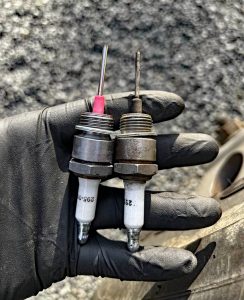
Screenshot
Given its location near and in the exhaust system, the ARD head is exposed to excessive heat on a regular basis (for example, soot needs to see at least 1,086 degrees F worth of heat during regeneration in order to converter soot to ash). Combine its harsh working environment with extreme complexity and you get a lot of failure points. “Failure to Ignite” is the most common message associated with ARD head issues and, in many truck applications, it requires annual attention in order to keep the vehicle reliable. It’s believed that the ARD head is responsible for more than 70-percent of all DPF-related issues on the C7S.
Solution(s)

Regrettably, there is no permanent solution for ARD head failure. And due to nothing other than the spark plug being serviceable (even the fuel injector is part of the overall assembly), complete replacement is the only option C7S owners have. On top of that, the ARD head is an expensive unit to replace, often running north of $1,200. And, should you choose to replace the ARD head yourself, it still requires a visit to an authorized CAT dealer in order to reset the codes set when the former ARD head was failing.
Problem #6: Lack Of Fuel Pressure

Many don’t know that HEUI engines require higher fuel supply pressure than most conventional diesels do. Whereas a mechanical, inline plunger type injection pump might see 25 to 35-psi worth of supply pressure and a common-rail diesel might see 15-psi, HEUI engines need roughly 75-85 psi. This is the case with CAT’s HEUI-equipped C7. And because supply pressure goes straight to the fuel injectors (not a high-pressure injection pump), any lack of fuel supply pressure will cause an immediate loss in power, a drop in fuel efficiency, and even engine stalling.
What Fails

Screenshot
The most common cause of low supply pressure on a CAT C7 is a bad fuel pressure regulator. The regulator is located on the intake side of the engine, at the back of the cylinder head, and is easy enough to access to diagnose or swap out. An ailing fuel pressure regulator will typically induce a few fuel pressure codes, especially if you’ve already changed out your fuel filters. Luckily, once confirmed as the problem, they are relatively cheap to replace. Expect to pay anywhere from $30 to $110 on a regulator, depending on where you source it from.
Solution(s)

Because low fuel supply pressure can damage the HEUI injectors on a C7, it pays to address a failing fuel pressure regulator as quickly as possible. As we mentioned above, a replacement regulator won’t break the bank and is accessible enough that a novice mechanic could handle the job. However, it pays to inspect the engine’s fuel primer pump at the same time to make sure you can effectively re-prime the low-pressure fuel system following the repair. Other than normal wear and tear on its internal components, contaminated fuel can send a regulator to an early grave. Change your fuel filters...
Problem #7: Transfer Pump Issues

On the heels of fuel pressure regulator issues, many C7’s face transfer pump problems. While not considered a major failure, transfer pump issues are fairly common on older, higher mile engines. On HEUI model C7’s, the transfer pump is married to the rear of the HEUI pump. In some applications, this doesn’t lend itself to the best accessibility. In instances where a transfer pump is suspected for a lack of fuel pressure condition but found to be in working order, the pressure relief valve in the back of the cylinder head (which is known to stick) is often the actual culprit.
What Happens

Screenshot
When the fuel transfer pump checks out, that all-important 65-85 psi worth of supply pressure no longer makes it to the injectors and poor performance, reduced fuel efficiency, and rough running conditions are the result. Sometimes, the cause of failure is traced back to a check valve issue within the transfer pump. Other times, it’s as simple as a leaky seal. Either way, performance suffers, usually in the form of hard starting (cold or warm), being down on power, and with the engine experiencing random instances of stalling.
Solution(s)

It’s important to note that replacing the transfer pump on a HEUI C7 is a bit more involved than simply removing the old unit and bolting on a new one. A guide pin (i.e. “caging” bolt) is required to keep the HEUI pump’s inner plate in alignment during removal so the HEUI pump isn’t damaged. As with any replacement components, always source a new fuel transfer pump from an OEM source or from a reputable aftermarket supplier. With proper fuel filter maintenance intervals and running clean, quality diesel fuel, C7 transfer pumps can remain in operation indefinitely.
Problem #8: Rocker Arm Assemblies

Of a single camshaft, overhead valve design, CAT did not try to reinvent the wheel with the C7. Instead, it’s very similar to the 3126 that came before it. The C7 uses a pushrod valvetrain with rocker arms located on a common shaft. Its valvetrain also employs two intake valves and one exhaust valve per cylinder (3-valve head). The rockers bolt to side covers (side covers being used to help contain oil and prevent debris from entering the engine) which are located on the intake side of the engine. Unfortunately, the rocker arm bearings are a known weak link in the valvetrain.
What Happens

Though not as common as the everyday, HEUI-related issues most C7’s face, rocker arm failures do occur with regular frequency, and they typically happen when the bearing fails. Symptoms of a failed rocker arm bearing include an audible top-end tick or tapping, and it’s usually followed by a weak cylinder contribution/balance indication. In virtually every instance, the camshaft becomes damaged. However, when complete failure unfolds the pushrod, the roller on the lifter, and even the valves can take on damage. Poor lubrication, improper installation, and lack of overhead maintenance can all contribute to rocker arm bearing failure.
Solution(s)

Following a rocker arm failure, it’s typical to replace the camshaft as well as the pushrods and rocker assembly. A thorough inspection of the rest of the valvetrain should also be conducted during the repair. And it goes without saying that you should only buy OEM or OEM-equivalent aftermarket replacement parts—and get them from a reputable source before you think about performing the work. Once repaired, it’s vital to ensure the overhead is set correctly, checked after 500 hours, and then run at the recommended 1,000-mile intervals following that.
Problem #9: Oil Leaks

Screenshot
Any aging diesel engine is bound to develop oil leaks at some point during its tenure. The CAT C7 isn’t notorious for springing oil leaks, but it does have its trouble spots. Still, CAT C7 common oil leaks are worth knowing about before they catch you by surprise. In high-mile applications, oil loss will typically come about due to high mileage or operating hours. On the other hand, in RV applications—where the miles and hours don’t rack up nearly as fast—oil leaks usually occur with age. In pusher style motorhomes, oil leaks often contribute to cooling stack accumulation and blockages, which can lead to overheating.
Where Does It Happen

A front structure leak is the most common place to find oil loss on a CAT C7. This is the source behind most CAT C7 common oil leaks reported by owners. This is because a sealant is employed here, rather than a gasket. Over time, the factory sealant degrades and becomes brittle, eventually allowing engine oil to slip past it. Unfortunately, addressing a front structure oil leak is a fairly laborious repair. It’s also frequent to find an oil leak at the engine’s side covers (on the intake side of the engine) or between the oil filter base and the block.
Solution(s)

Screenshot
With front structure leaks being the dominant point of oil loss on a C7, we’ll cover that repair. Addressing CAT C7 common oil leaks early keeps a simple reseal from turning into a bigger repair. To fix a front structure oil leak, all engine oil and coolant has to be drained, the front cover pulled, and the remainder of the original sealant (and its residue) cleaned up. With new sealant applied, the front cover can be reinstalled, but along the way a new front crankshaft seal should be installed, and all required torque specs adhered to. As with all engine repairs, stick with OEM replacement components whenever possible.
Problem #10: Oil Pump Failure

On a C7, the oil pump is located at the front of the engine and is accessible via the oil pan. And, as previously mentioned, it has more than one job to do. In addition to its conventional role of providing lubrication and pressure for the engine’s bearings, valvetrain, and turbo, it must also feed the HEUI pump. Then, in conjunction with the HEUI pump supplying oil volume and the Injection Actuation Pressure Control valve on the HEUI pump’s outlet ramping up oil pressure from roughly 50-psi to as much as 3,500 psi, it is ultimately used to actuate the fuel injectors. While low-pressure oil pumps don’t drop like flies in the C7, they do fail from time to time.
What Happens

Screenshot
In particular, the oil pump’s idler bearing is known to seize. This takes the oil pump out of commission and, with engine-killing potential, starves the engine of oil pressure. Unfortunately, low or zero oil pressure is usually the only sign that the oil pump’s idler bearing has checked out. Hopefully, the resulting low oil pressure condition is detected by the operator in short order and the engine can be shut down before any internal damage occurs. As a general rule of thumb, it’s always worth inspecting the idler bearing any time the oil pan is off your C7.
Solution(s)

OEM-engineered solutions have a tremendous way of restoring peace of mind. Luckily, CAT discovered and addressed the oil pump problem by releasing an updated pump, which comes with a larger bearing on the idler. The bearing’s larger overall size improves its lifespan considerably over the original version. As we alluded to above, the oil pump can be accessed by pulling the oil pan, along with the pickup tube assembly. In most medium-duty truck applications, oil pump replacement books for 5 to 7 labor hours. Due to accessibility constraints, the same repair typically calls for at least two additional labor hours on C7-powered motorhomes.


