


Written By, Mike McGlothlin
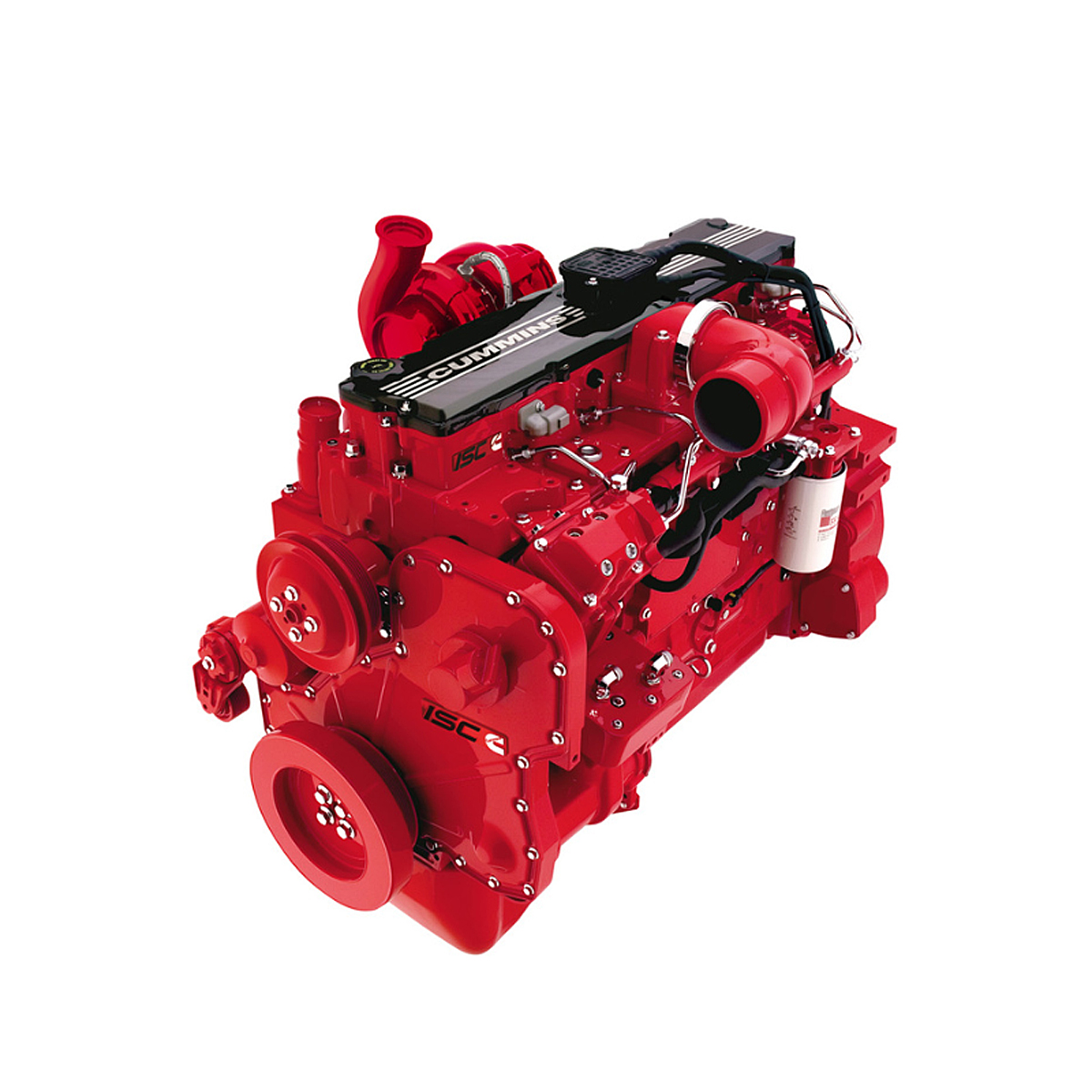
In the world of medium-duty trucks and hardworking agriculture, construction, mining, forestry, and industrial applications, the Cummins ISC is an industry workhorse. Released in 1998, this iron block and head inline-six replaced the mechanical (and venerable) 6CT. The ISC brought a 24-valve cylinder head, more power and torque, better coolant flow (by way of a redesigned block) and electronic control to the 8.3L platform. In time, it would go from a CAPS fuel system to high-pressure common-rail and also gain modern era emissions-curbing equipment. While reliable, each version of the ISC possesses its own unique share of weak links. We’ll explore those problems below—as well as provide a sound solution for each.
HIGHLIGHTS
Most Common Problems:
*Lift Pump Failure
*CAPS Pump Failure
*Cracked Exhaust Manifold
*VGT Actuator Failure
Most Expensive Problem:
*CAPS Pump Failure
*Blown Head Gasket
*Dropped Valves
*Liner Failure
*DPF Replacement
Less-Frequent Headaches:
*Oil Leaks
*Dropped Valves
Problem #1: Lift Pump Failure

8.3L ISC Cummins Electric Fuel Lift Pump
If you’re familiar with the fuel system on the Cummins ISB 24-valve 5.9L, you basically know how it functions on the ISC. Though the ISC’s injection pump wasn’t sourced from Bosch and is instead one of Cummins’ own, in-house modular designs, it’s very similar and revolves around the use of a distributor style (rotary) high-pressure injection pump. On the ISC this pump is known as the CAPS pump (Cummins Accumulator Pump System), an electronically controlled unit capable of carrying out injection events independently from engine speed. The CAPS pump is supported by a self-priming electric lift pump.
What Happens

Cummins ISC Diesel Fuel Lift Pump Medium Duty Engine
Unfortunately, the lift pump on the Cummins ISC is notorious for failing. First and foremost, they tend to develop leaks—leaks which allow air to infiltrate and aerate the fuel injection system. Not only is this hard on the lift pump, but also the expensive CAPS pump. Once fuel pressure being supplied to the CAPS pump drops below 5-psi, the high-dollar rotary unit is on borrowed time. To a lesser degree, foreign contaminants kill the lift pump (think water or rust in the fuel system, as well as dirt and other debris that makes it past the fuel filters).
Solution(s)

Aftermarket Electric Lift Pump 8.3L Cummins
004 Aftermarket Electric Lift Pump 8.3L Cummins
The best solution for a failing lift pump is to replace it before it kills the CAPS pump. Just remember that an ailing lift pump can (and often does) damage the CAPS unit—so don’t be surprised if the CAPS pump checks out after the new lift pump goes in. To keep tabs on the health of the lift pump (and the fuel supply system as a whole), our advice is to add a low-pressure fuel supply gauge and mount it in a highly visible area. As for keeping the lift pump happy, regular filter changes, high-quality fuel, and a reputable fuel additive go a long way in prolonging its lifespan.
Problem #2: CAPS Pump Failure

Cummins ISC CAPS Fuel Pump
Thanks to its electronic control providing an ability to vary injection timing and fuel quantity independent of engine speed, the CAPS pump made the Cummins ISC a much more powerful and fuel-efficient power plant than its predecessor (the 6CT). And thanks to being combined with a 4-valve cylinder head, the ISC is notably more emissions friendly. However, the CAPS pump is nowhere near as reliable as the mechanical, inline plunger pump found on the 6CT. Like the Bosch VP44 on the Cummins ISB 24-valve 5.9L, the CAPS pump can fail for a myriad of reasons.
What Happens

Cummins CAPS Fuel Pump Failure Diesel Engine Carnage
Unfortunately, when the lift pump fails to maintain adequate fuel pressure and volume to the CAPS pump, it too incurs damage and can eventually fail. Long crank, no start, a sudden loss in power, and “dead pedal” scenarios are the most common symptoms associated with CAPS pump failure. When the CAPS pump is deprived of adequate low-pressure fuel supply, it sees extreme internal heat—and it’s this heat soak that can damage the pump’s internals. Of course, fuel contamination not contained by the filters can accelerate internal wear and lead to premature failure as well.
Solution

Remanufactured Cummins CAPS Fuel Injection Pump Label Diesel Engine
Be forewarned, a new or remanufactured CAPS pump isn’t cheap. And any time the CAPS pump is replaced it greatly behooves you to start with a fresh lift pump also. This rules out the potential for a weak lift pump to take out your brand-new ($4,000-plus) CAPS unit. And similar to keeping the lift pump happy, once both pumps are replaced it’s highly advised that you install a low-pressure fuel supply gauge and keep a watchful eye on it. From there, routine filter changes, only putting clean, quality fuel in the tank, and running a reputable diesel additive go a long way in keeping the CAPS system happy.
Problem #3: Cracked Exhaust Manifold

Turbo Exhaust Manifold Cummins ISC 8.3L Diesel Engine Parts
Few things can rob power quicker on a turbocharged diesel engine than an exhaust leak can. Although the Cummins ISC is less prone to suffering a cracked exhaust manifold than the 6CT is, it’s still a fairly common failure point on this workhorse. Old age, countless heat cycles, abuse, and corrosion all take their toll on this vital component. Most often, all of the above can culminate in hairline cracks developing on the exhaust manifold. Other times, the exhaust manifold warps, causing exhaust leaks at the gaskets where it attaches to the cylinder head.
What Happens

Cracked Exhaust Manifold Cummins Isc Turbodiesel Engine
A leak from the exhaust manifold means a loss in drive pressure. And because drive pressure is used to drive the ISC’s turbocharger, the operator usually notices a decrease in power output. But that’s not all… A drop in boost pressure, added fuel consumption, and a warmer running engine are also often experienced on an engine that’s forced to operate with a leaking exhaust manifold. And, depending on how bad the leak is, you’ll have a mess of soot on the passenger side of the engine and/or all over the engine compartment.
Solution(s)

New Exhaust Manifold Isc Cummins Diesel Engine Parts
Solutions vary here, with both new and used exhaust manifold options available. If it’s us, we’re replacing a cracked OEM manifold with a brand-new OEM replacement—and we’ll make sure it’s the updated style Cummins switched over to years ago. Exhaust manifold replacement also calls for new gaskets (and ideally, fresh manifold bolts) and close inspection of the manifold and head’s mating surfaces prior to installation. Mating surfaces have to be as true (i.e. flate) as possible for the best seal. Never repair a cracked manifold (or replace it with a secondhand unit) and expect it to last indefinitely.
Problem #4: Wet Sleeve Failure

Wet Sleeve Cavitation 8.3L Cummins Diesel Engine
Just like the 6CT, the Cummins ISC makes use of a wet liner in each cylinder. These ductile iron sleeves circulate coolant around the circumference of the exterior, which helps keep each cylinder perfectly round despite the combustion temperatures each one sees. On top of that, they are replaceable, which makes individual cylinder repair possible, both in the field and in the shop. Not all medium-duty diesel engines are graced with wet sleeves, so this is a definite bonus for 8.3L owners. However, and not unlike their heavier-duty, Class 8 counterparts, the ISC’s wet sleeves do fail from time to time.
What Happens

Cummins ISC Diesel Engine Damage Wet Sleeve Cracked Liner
Cavitation is the biggest killer of Cummins ISC liners. With prolonged intervals of it, dozens of tiny pin holes develop in the liner. Eventually, one or more of those holes penetrates all the way through and you get coolant mixing with engine oil. When coolant infiltrates the oil system, bottom end bearing life becomes a concern. And when engine oil contaminates the cooling circuit you get a huge mess. In other instances of liner failure, it’s often an O-ring that fails, no longer keeping the two fluids separate. A pressurized cooling system and/or the engine “making oil” according to the dipstick are telltale signs of wet liner failure.
Solution(s)

8.3L Cummins Wet Sleeve Cylinder Liner
The first step to avoiding wet sleeve failure on an ISC engine is to run the exact coolant specified by Cummins, treating the engine to flushes at the recommended interval(s), and maintaining the correct coolant level within the system. When it’s too late and a new sleeve is the only remedy, expect a bit of downtime—even if only one sleeve is being replaced. Depending on the mileage or hours on the engine at the time of a wet sleeve failure, some owners opt for a complete rebuild, as failure of the other sleeves may not be very far off.
Problem #5: VGT Actuator (’07-later Engines)

Cummins ISC Holset VGT Turbo
In 2003, Cummins revised the ISC to utilize high-pressure common-rail injection. Then, beginning in 2007 a variable geometry turbo (VGT) came standard. Both of these changes were brought about in order to meet the tightening diesel emissions regulations of the day. High-pressure common-rail (HPCR) brought higher injection pressure into the fold to reduce particulate matter production while the VGT—a quicker-spooling turbo than the fixed geometry Holset HX40 of old—did the same. Unfortunately, the complicated VGT proved more finicky and problematic than its predecessor.
What Happens

Cummins ISC VGT Turbo Sector Gear
Most VGT issues stem from the turbo’s electronic actuator. The actuator is tasked with instantly commanding the sliding nozzle mechanism within the exhaust/turbine side of the VGT. Unfortunately, it resides in a hot environment that’s perpetually polluted with soot and carbon. Over time, the VGT actuator tends to stick or seize in one fixed position—the result of which is either no low-end power or no top-end power (depending on which position it seizes in). Within the actuator itself, sector gear problems—in the form of sticking or attempting to seize up before full travel is possible—can also kill the actuator.
Solution(s)

VGT Turbo Actuator 8.3L Cummins Isc
Proper diagnosis is key here, because if the sector gear is faulty, you’re looking at a turbo issue (and possibly an actuator issue as well). If the turbine side of the VGT moves freely, it’s likely only an actuator issue. As you may have already deduced, the latter issue is a much less expensive problem to have. Sourcing a new actuator can be pricey (north of $1,000), but it pales in comparison to buying a remanufactured turbo (upward of $2,700). Again, finding the source of the problem is paramount with any VGT issue. Never throw high-dollar parts at an engine hoping it will solve your problem.
Problem #6: EGR (’07-later Engines)

EGR Cooler Cummins ISC Emissions System
With the addition of HPCR already having changed the Cummins ISC in the form of ushering it into the modern, clean-diesel era, exhaust gas recirculation (EGR) became standard beginning in 2007. EGR is well-known as one of the most effective NOx-scrubbing technologies in existence, and with ever-tightening NOx standards coming into play in 2007 and beyond it was necessary in order to keep the ISC 50-state compliant. While HPCR reduces in-cylinder production of particulate matter, the high combustion temperatures it brings with it leads to increase NOx. EGR brings those NOx limits back down to allowable levels.
What Happens

EGR Valve Carbon Buildup Soot Diesel Emissions System Cummins Isc
It’s commonplace for EGR systems to be highly problematic on diesel engines, and the Cummins ISC is no exception. A leaking or cracked EGR cooler is extraordinarily frequent, as are sticking, stuck, and completely seized up EGR valves. Given the soot-laced, carbon-coated environment these components have to live in, it’s no wonder they plug up or succumb to the harsh conditions they experience on a perpetual basis. A ruptured EGR cooler core often means excessive coolant loss (most often denoted by white smoke leaving the tailpipe) and a stuck EGR valve usually results in excessive emissions and a power derate.
Solution(s)

Cummins Oem Egr Valve Isc Diesel Engine
A new EGR cooler is the only fix for a cracked or leaking unit. As for an EGR valve, sometimes it can be salvaged with removal and a thorough cleaning. On that note, regular EGR system cleanings are highly recommended for the Cummins ISC or any other 2007-present diesel engine that meets U.S. EPA emission standards. Unfortunately, EGR system failures are par for the course on ISC engines equipped with it. But this makes running the correct engine oil and coolant all the more important. Performing regular cleanings and running the correct fluids will ensure your EGR system components enjoy the longest possible service life.
Problem #7: DPF (’07-later Engines)

Cracked Diesel Particulate Filter Cummins Isc Engine
When U.S. EPA diesel emissions regulations tightened up in 2007, Cummins and essentially every other engine manufacturer began equipping its diesel power plants with an elaborate exhaust aftertreatment system. One of the key pieces in this emissions-scrubbing aftertreatment system is the diesel particulate filter (DPF). Its purpose is to trap particulate matter (PM), keeping it from exiting the tailpipe (or stack) and entering the atmosphere. Once the DPF fills with PM (i.e. soot), an extreme heat, regeneration process is carried out in order to transform the trapped PM material into a more storable, fine ash.
How (And Why) They Fail

Plugged DPF Cummins Isc Diesel Emissions Exhaust Aftertreatment
Although the self-cleaning regeneration process can keep the DPF operational for thousands of miles, eventually it will plug up completely, requiring either disassembly and cleaning or complete replacement. In other cases, the DPF itself fails prematurely—most notably when the internal core cracks or ruptures, allowing PM to leak out of the exhaust system. Often, the DPF remains functional but the sensors associated with the aftertreatment system fail, causing power derates, limp modes, and even eventual no-start scenarios. Specifically, the pressure differential sensors and EGT sensors are most notorious for failing out of the blue.
Solution(s)

Cummins ISC DPF Cleaning Diesel Emissions Maintenance
Unfortunately, the only solution for a failed DPF or its surrounding components on an ’07-later Cummins ISC is to install OEM replacement or equivalent components. This often means sensors prone to early failure and a DPF that may or may not enjoy a long service life. Warning: DPF’s aren’t cheap. This makes preventative maintenance crucial. Regular DPF cleanings, allowing the regeneration process to continue rather than shut the engine down, and addressing any regeneration or DPF-related problems immediately are paramount. It’s also important to note that contaminants like fuel, oil, and coolant will ruin the DPF, so solve these issues immediately should they ever occur.
Problem #8: Blown Head Gasket

Blown Head Gasket Cummins Diesel Engine Cylinder Bores Block
Blown head gasket(s). It’s a problem that often affects aging, high operating hour, hardworking diesel engines. But suffering a blown head gasket with a Cummins ISC is fairly common. Not as frequent as it was with the 6CT (the ISC’s predecessor), but frequent, nonetheless. Finding excess pressure in the cooling system is a telltale sign that the cylinder head has lifted, allowing compression to infiltrate the coolant. Another sign manifests itself in the form of burning coolant—a can’t-miss smell emanating from under the hood.
What Often Happens

Diesel Engine Blown Head Gasket Cummins Isc Medium Duty Truck
Overheating, disappearing coolant, pressurization of the cooling system, white smoke leaving the tailpipe, and a fluctuating needle on the water temp gauge all point toward a blown head gasket with the ISC. High miles and operating hours, exposure to extreme heat (EGT and/or coolant), a lack of coolant, or poor coolant flow can all culminate in the loss of that all-important head-to-block seal. Oftentimes, operator abuse of an aging engine is to blame, and prolonged operation of the engine with a blown head gasket can bring about plenty of collateral damage. Think warped or cracked cylinder head and, in worst case scenarios, even dropped valves or piston and cylinder wall damage.
Solution(s)

Head Gasket Repair 8.3L Cummins Diesel Truck Engine
Pulling the cylinder head and replacing the head gasket is obviously inevitable here, but a myriad of other things need to be checked off in order to restore the operation of your Cummins ISC. First, the head must be inspected for cracks, checked for possible warpage, and either resurfaced or (if necessary) replaced altogether. Additionally, the block must be examined for possible warpage (usually unlikely) and each cylinder checked for cylinder wall, piston, and ring health. It also pays to source a fresh set of head bolts for the repair, along with torquing them (and everything else) to the proper specification.
Problem #9: Oil Leaks

Cummins Isc Front Gear Cover Oil Leak Repair
Even more so than blown head gaskets, oil leaks are a part of life for old, well-worn diesel engines. The Cummins ISC is not alone here, with everything from slow seepage to considerable oil loss being common as these engines age. Years, NVH, countless duty cycles, decades of expansion and contraction, and even abuse can all result in oil leaks. It’s inevitable that an O-ring, gasket, or other type of seal will allow seepage at some point in an ISC’s life. Just remember that, while oil leaks are a bit of an unpleasant sight, they’re nowhere near as worrisome as an engine with an oil consumption problem.
Where They Leak

Oil Leak Cummins Isc Rear Cam Journal Plug Failure
A host of potential leak points exist on the ISC platform, but these are the most common spots to lose oil from. 1. The timing gear cover gasket. 2. The rear main seal. 3. The rear camshaft journal plug (shown). It’s also common for a leak to originate from a bad oil cooler/oil filter adapter gasket. To a lesser extent, and especially with age, turbo seals become a common source of oil leakage. Last but not least, a plugged up valve cover breather filter will result in an oil leak—and it’s why we would always check here first when a leak is suspected to have originated at the top of the engine.
Solution(s)

Isc Cummins Diesel Engine Repair Parts Lower Gasket Set
Depending on the severity of the leak (and the hours on the engine), some Cummins ISC owners opt to hold off on a complete reseal until an engine overhaul is performed. Others elect to address leaks before they worsen. For either repair, a plethora of reseal kit options exist in both the OEM market and aftermarket. Labor involvement varies based on the difficulty of accessing and repairing the leak, but repairs such as a timing gear cover gasket and a rear camshaft journal plug can be fairly laborious. To limit downtime, always source each gasket, seal and O-ring you’ll need for the job, and have an experienced Cummins mechanic handle the work.
Problem #10: Dropped Valves

8.3L Cummins Isc 24 Valve Cylinder Head Repair
No type of valvetrain failure comes without some form of internal damage, but dropped valves are some of the most devastating mishaps an engine can experience. If you’re lucky, cylinder head work is all that’s required to repair it. But if piston-to-valve contact cracks or damages a piston, gouges a cylinder wall, or spreads metal debris from cylinder to cylinder, you could potentially be looking at catastrophic engine failure. Unfortunately, while destructive, dropped valves are always a possibility for high hour, high mileage Cummins ISC engines—and especially those that see abuse.
What Happens

Cracked Cylinder Head Valve Seat Cummins Isc Diesel Engine Damage
Dropped valves typically stem from cracking on the fire deck surface of the cylinder head. With time, heat cycles, and especially abuse (i.e. excessive EGT and/or coolant temps), cracks can develop in the head. Gradually, these hairline cracks tend to spread. When or if they spread into the valve seat area(s), they can eventually dislodge the valve seat. When that happens, the seat’s position within the head is compromised and it can break apart or completely fall off, hence “drop” into the cylinder beneath it. Especially if the engine isn’t shut down in a timely manner, a dropped valve can lead to irreparable damage.
Solution(s)

Isc Cummins Cylinder Head Rebuild Resurface Machine Shop
At minimum, cylinder head repair (and sometimes even replacement) is on the table when an engine drops a valve. And many owners opt for a fresh head anyway, for the sake of beginning anew. If collateral damage from the dropped valve is extensive, you may have to delve deeper into the engine (and your wallet) to repair things. Occasionally, a full-on rebuild—and in rarer cases, sourcing a new crankcase—is required. If you’re looking to avoid a dropped valve and the formation of cracks within the cylinder head, always put an alert, non-abusive operator in the driver seat. Keeping the Cummins ISC from overheating and out of the EGT


